
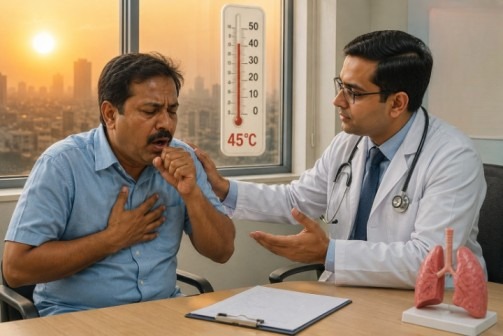
Why Hot and Humid Weather Affects Breathing
The human body constantly works to maintain a stable internal temperature. During extreme heat, the body uses more energy to cool itself through sweating and increased blood circulation. As a result, breathing rate and heart rate naturally increase.
For healthy individuals, this may only feel uncomfortable. However, for people with asthma, COPD, or reduced lung capacity, this additional strain can worsen breathlessness, fatigue, and chest discomfort.
Humidity makes the situation even more difficult. Moist and heavy air reduces sweat evaporation, making it harder for the body to cool down efficiently. Humid conditions can also trap pollutants, dust particles, pollen, and smoke close to the ground, further irritating the airways.
In crowded urban areas, summer heat also increases ground-level ozone and smog formation. These pollutants can trigger:
- Persistent coughing
- Wheezing
- Chest tightness
- Shortness of breath
- Asthma attacks
Respiratory specialists warn that heatwaves combined with poor air quality can significantly affect overall lung function.
How Heat Can Trigger Asthma and COPD Flare-Ups
People with asthma often experience worsening symptoms during extremely hot or humid weather because their airways become more sensitive to environmental triggers.
Common summer triggers include:
- Air pollution
- Smog
- High pollen levels
- Dust exposure
- Humidity
- Smoke
- Sudden temperature changes
Similarly, individuals with COPD may notice:
- Increased breathlessness
- Frequent coughing
- Wheezing
- Excessive fatigue
- Increased mucus production
In severe situations, extreme heat may lead to dehydration, heat exhaustion, or heat stroke, particularly in elderly individuals and people with chronic respiratory disease.
Many patients consulting a Lungs Specialist in Nagpur during summer months complain of worsening respiratory symptoms caused by rising temperatures and pollution exposure.
Swimming Pool Usage Can Sometimes Trigger Breathlessness
While swimming is generally considered a healthy exercise for the lungs and overall fitness, some individuals with asthma or sensitive airways may experience breathing difficulties after spending time in swimming pools.
This is mainly due to chlorine and other pool-cleaning chemicals that can irritate the respiratory tract. Indoor swimming pools with poor ventilation may increase exposure to chemical fumes, making symptoms worse in people with asthma, allergies, or chronic lung disease.
Common symptoms may include:
- Wheezing
- Coughing after swimming
- Chest tightness
- Shortness of breath
- Throat irritation
Children and individuals already living with asthma may be more sensitive to these chemical irritants, especially during summer when pools are crowded and chemical usage increases.
To reduce the risk of breathing discomfort while using swimming pools:
- Choose well-ventilated swimming pools
- Avoid pools with a strong chlorine smell
- Shower before and after swimming
- Use prescribed inhalers if advised by your doctor
- Stop swimming immediately if breathing becomes difficult
Respiratory experts and every experienced Asthma Specialist in Nagpur advise patients with asthma or COPD to pay attention to how their body reacts after swimming and seek medical advice if symptoms frequently worsen.
Who Is Most Vulnerable During Heatwaves?
Certain groups are more likely to experience respiratory complications during extremely hot weather.
These include:
- People with asthma or COPD
- Elderly individuals
- Young children
- Smokers
- Individuals with heart disease
- Outdoor workers
- People living in polluted cities
People who already have weakened lung function may struggle even after short exposure to high temperatures and humidity.
Warning Signs You Should Never Ignore
Breathing problems can worsen rapidly during extreme heat. Immediate medical attention may be necessary if you notice:
- Severe shortness of breath
- Wheezing that does not improve
- Chest tightness
- Difficulty speaking due to breathlessness
- Bluish lips or fingertips
- Persistent coughing
- Dizziness or confusion
- Extreme weakness or fatigue
Early treatment can help prevent serious respiratory complications.
Practical Ways To Protect Your Lungs During Hot Weather
Simple precautions can greatly reduce the risk of heat-related breathing problems.
1. Stay Indoors During Peak Heat Hours
The hottest period of the day is usually between 11 AM and 4 PM. During this time, temperatures, humidity, and pollution levels are often highest.
If possible:
- Stay indoors
- Use air-conditioned spaces
- Avoid unnecessary outdoor travel
If your home is not air-conditioned, consider spending time in libraries, shopping centres, or other cool public spaces.
2. Keep Indoor Air Clean And Cool
To reduce indoor heat and pollution:
- Keep windows and doors closed during very hot or polluted days
- Use curtains or blinds to block direct sunlight
- Use fans, air conditioners, or dehumidifiers
- Avoid indoor smoking or strong chemical scents
If outdoor temperatures become cooler at night and air quality improves, opening windows may improve ventilation.
3. Stay Properly Hydrated
Dehydration can thicken mucus inside the airways, making breathing more difficult.
Drink adequate amounts of:
- Water
- Fresh fluids
- Electrolyte-rich drinks if sweating heavily
Avoid excessive alcohol and caffeine, as they may contribute to dehydration.
4. Avoid Heavy Physical Activity Outdoors
Strenuous exercise during extreme heat increases oxygen demand and breathing rate, placing additional stress on the lungs.
If physical activity is necessary:
- Exercise early morning or evening
- Prefer indoor workouts
- Take frequent rest breaks
5. Wear Light And Breathable Clothing
Loose, light-coloured clothing helps the body cool more effectively.
When outdoors:
- Wear a hat or carry an umbrella
- Choose breathable fabrics like cotton
- Avoid dark or tight clothing
6. Continue Asthma And COPD Medications
People with chronic respiratory disease should continue prescribed medications regularly, even if symptoms seem stable.
Important precautions include:
- Carry rescue inhalers at all times
- Follow your asthma or COPD action plan
- Consult a doctor if symptoms worsen
- Delaying treatment may lead to severe respiratory flare-ups.
7. Control Indoor Humidity Levels
Excess humidity can worsen breathing discomfort and encourage mould growth indoors.
Using:
- Air conditioners
- Dehumidifiers
- Proper ventilation systems
- can help maintain healthier indoor air quality.
8. Recognise Signs Of Heat Stroke
Extreme heat can sometimes become life-threatening.
Warning signs include:
- High body temperature
- Rapid heartbeat
- Severe weakness
- Confusion
- Fainting
Immediate medical care is essential if these symptoms occur.
Why Heatwave Awareness Matters More Than Ever
Climate change is increasing the frequency and intensity of heatwaves worldwide. Along with rising temperatures, air pollution and respiratory illnesses are also becoming more common.
Health experts believe that protecting lung health during summer is now essential, especially for individuals with asthma, COPD, or reduced lung function.
Simple preventive measures, timely medical attention, proper hydration, and awareness of environmental conditions can significantly reduce respiratory complications during hot weather.
Conclusion
Hot and humid weather can place considerable stress on the respiratory system, particularly for individuals living with asthma, COPD, allergies, or chronic lung disease. Heat, humidity, pollution, and dehydration together can worsen breathing difficulties and increase the risk of serious flare-ups.
However, by staying cool, monitoring air quality, remaining hydrated, avoiding overexertion, and following medical advice carefully, people can protect their lungs during extreme summer conditions.
If you frequently experience breathing difficulty, wheezing, or persistent cough during hot weather, consulting an experienced respiratory expert or an Asthma Specialist in Nagpur can help you manage symptoms more effectively and protect your long-term lung health.