Targeted Therapy for Lung Cancer: A Modern Approach to Better Treatment
By drsushantmuley
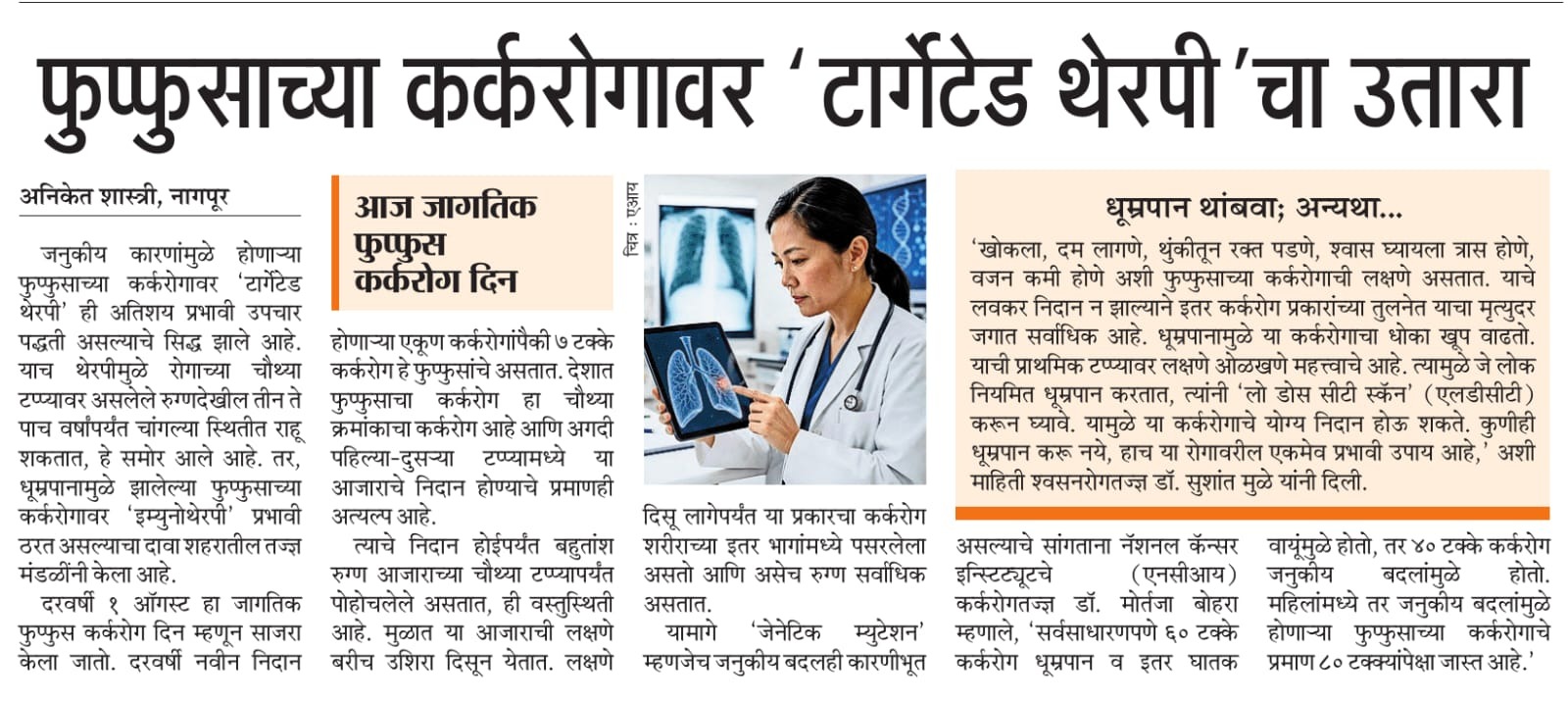
Lung cancer is one of the most serious diseases affecting the respiratory system but advances in diagnosis and treatment have improved the options available to patients. Targeted therapy is one such modern approach that focuses on specific changes in cancer cells. If you are looking for a Lungs Specialist in Nagpur understanding how lung cancer is detected and treated can help you take timely action.
What Is Lung Cancer?
Lung cancer develops when abnormal cells in the lungs grow uncontrollably. These cells can form a tumour and may eventually spread to other parts of the body.
According to the information highlighted in the newspaper article, lung cancer is often detected at a later stage because early symptoms can be mild or mistaken for common respiratory problems. This is why awareness of symptoms and appropriate medical evaluation are important.
Common symptoms may include:
- Persistent cough
- Difficulty in breathing
- Chest discomfort or pain
- Coughing up blood
- Unexplained weight loss
- Repeated respiratory infections
- Persistent tiredness
Not everyone with these symptoms has lung cancer. However, symptoms that continue or worsen should be evaluated by a qualified doctor.
What Is Targeted Therapy for Lung Cancer?
Targeted therapy is a type of cancer treatment designed to act on specific molecules or genetic changes that help cancer cells grow and survive.
Unlike treatments that affect many rapidly dividing cells, targeted medicines are developed to focus on particular characteristics of cancer cells. Depending on the type of lung cancer and the molecular changes identified, targeted treatment may be considered as part of an individual's treatment plan.
Before choosing this approach, doctors may recommend appropriate testing of the tumour. These tests can identify certain genetic or molecular changes that may help determine whether targeted therapy is suitable.
Why Genetic Testing Can Be Important
Lung cancer is not exactly the same in every patient. Different tumours can have different genetic characteristics.
Molecular or genetic testing may help doctors understand whether cancer cells have specific changes that can be treated with targeted medicines. This can help create a more personalised treatment approach.
The decision to perform these tests depends on factors such as the type and stage of cancer, the patient's overall health and the characteristics of the tumour.
A Pulmonologist in Nagpur can help assess respiratory symptoms, arrange appropriate investigations and guide patients toward the right specialist when lung cancer is suspected.
Smoking and Lung Cancer Risk
Smoking remains one of the major preventable risk factors for lung cancer. Tobacco smoke contains harmful substances that can damage lung cells over time.
Stopping smoking is beneficial at every stage. People who smoke should consider professional support to quit. Avoiding exposure to second-hand smoke is also important.
However, smoking is not the only possible risk factor. Lung cancer can also occur in people who have never smoked. Other factors may include exposure to certain workplace substances, air pollution, family history and genetic changes.
Can Lung Cancer Be Detected Early?
Early detection can make a significant difference in the management of lung cancer. People at increased risk may be advised to undergo low-dose CT (LDCT) screening, depending on their age, smoking history and other risk factors.
Screening is not suitable for everyone. A doctor can assess individual risk and determine whether screening is appropriate.
If you experience persistent breathing problems, unexplained cough or other concerning respiratory symptoms, consult a Lungs Specialist in Nagpur rather than ignoring them or relying only on home remedies.
Importance of Personalised Lung Cancer Treatment
Treatment for lung cancer depends on several factors, including:
- Type of lung cancer
- Stage of the disease
- Genetic or molecular characteristics
- Overall health
- Previous treatments
- Response to treatment
Depending on the situation, treatment may include surgery, chemotherapy, radiation therapy, targeted therapy, immunotherapy or a combination of approaches.
Targeted therapy may be particularly useful when specific molecular changes are found. However, it is not appropriate for every patient. A cancer specialist and respiratory team can determine the most suitable treatment strategy after detailed evaluation.
When Should You Consult a Doctor?
Do not ignore a cough that continues for a long time, unexplained breathing difficulty, chest discomfort, coughing up blood or unexplained weight loss.
Timely medical evaluation can help identify the underlying cause. If necessary, the doctor may recommend imaging tests, blood tests, lung-related investigations or further evaluation.
A Lungs Specialist in Nagpur can help assess symptoms and determine whether further investigation is required.
Frequently Asked Questions (FAQs)
1. What is targeted therapy for lung cancer?
Targeted therapy is a modern cancer treatment that focuses on specific genetic or molecular changes in cancer cells. It may help slow or stop cancer growth in patients who have suitable targets.
2. Is targeted therapy suitable for every lung cancer patient?
No. Targeted therapy is generally considered when specific genetic or molecular changes are found in the tumour. Doctors may recommend molecular testing before selecting this treatment.
3. What are the common symptoms of lung cancer?
Common symptoms may include persistent cough, breathing difficulty, chest discomfort, coughing up blood, unexplained weight loss, tiredness and repeated respiratory infections.
4. Does smoking increase the risk of lung cancer?
Yes. Smoking is one of the major risk factors for lung cancer. Quitting smoking can reduce the risk and is beneficial for overall lung health.
5. Can non-smokers develop lung cancer?
Yes. Although smoking is a major risk factor, lung cancer can also occur in people who have never smoked. Other factors may include environmental exposure, air pollution, family history and genetic changes.
6. What tests are used to diagnose lung cancer?
Depending on the symptoms, doctors may recommend imaging tests such as CT scans, along with other investigations and, when necessary, tissue or molecular testing.
7. When should I consult a Pulmonologist in Nagpur?
You should consider medical evaluation if you have a persistent cough, unexplained breathing difficulty, chest discomfort, coughing up blood or other respiratory symptoms that do not improve.
8. How can a Lungs Specialist in Nagpur help with suspected lung cancer?
A lung specialist can evaluate respiratory symptoms, recommend appropriate investigations and help guide the patient toward suitable treatment or further specialist care when required.
9. Is lung cancer treatable?
Lung cancer treatment depends on its type, stage, molecular characteristics and the patient's overall health. Treatment options may include surgery, chemotherapy, radiation therapy, targeted therapy and immunotherapy.
10. Can lung cancer be detected early?
In people at higher risk, low-dose CT screening may help detect lung cancer earlier. Whether screening is appropriate depends on individual risk factors and should be discussed with a doctor.
Conclusion
Modern lung cancer care is becoming increasingly personalised and targeted therapy can provide an important treatment option for selected patients with specific molecular changes. Early evaluation, appropriate testing, smoking cessation and regular medical guidance all have an important role in lung health. If you notice persistent respiratory symptoms or have concerns about lung cancer, consult a Pulmonologist in Nagpur for proper evaluation and guidance.